
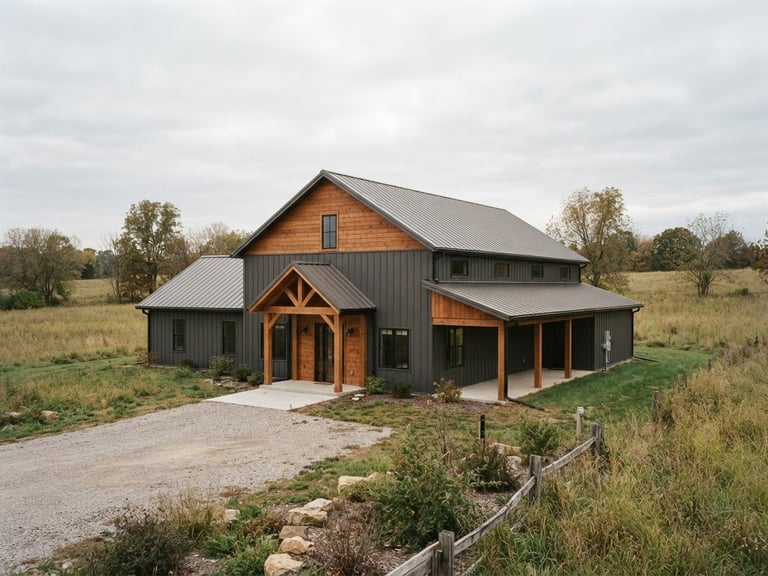
Barndominium vs. Traditional Home
If you're deciding between a barndominium and a traditional stick-built home, cost is usually the first question — but it's not the only one that matters. Here's how the two options actually compare, on price and beyond.
BarndoBudgetGuide is an independent resource. We are not a builder or real estate agent. This guide is educational — always weigh your own priorities and local market conditions before deciding.
The Core Difference
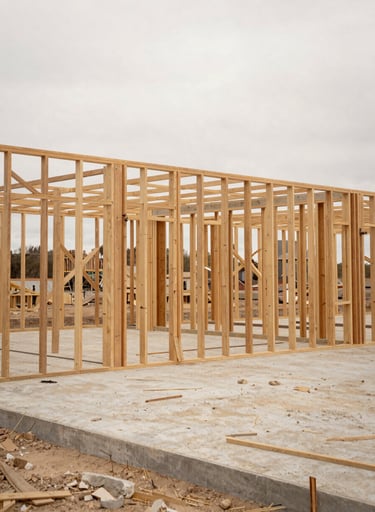
A traditional home uses wood-frame stick-built construction, which is what most contractors, lenders, and appraisers are set up to handle by default. A barndominium uses post-frame or steel-frame construction — originally developed for agricultural and shop buildings, now widely adapted for residential living. That structural difference is what drives most of the cost gap between them.
Cost Comparison
Barndominium
Traditional Home
Using our calculator's national mid-range figures, a 2,400 sq ft barndominium (40×60 footprint) runs roughly $240,000-$360,000 turnkey. Steel-frame and post-frame construction generally requires less labor-intensive framing than traditional stick-built homes, which is a meaningful part of the savings.
A comparably sized 2,400 sq ft traditional stick-built home typically costs more, generally saving barndominium buyers 15-25% compared to stick-built homes of similar size, largely due to reduced labor hours and material waste in post-frame construction.
Where the Savings Actually Come From
Simpler framing
Faster build timelines
Exterior material efficiency
Post-frame construction uses fewer, larger structural members spaced farther apart than traditional stick framing, which reduces both material and labor costs.
Barndominium shells typically go up faster than traditional framing, which can reduce overall labor costs and get you into financing conversion sooner.
Metal siding and roofing, common on barndominiums, is often less labor-intensive to install than brick, traditional siding, or architectural shingle roofing.
Where Traditional Homes Still Have Advantages
Financing familiarity
HOA and zoning restrictions
Traditional homes are the default property type most insurers and appraisers are built around, which can mean fewer complications during the buying and insuring process.
Some residential zones and HOAs have restrictions on metal-exterior or agricultural-style structures. Always confirm local zoning before assuming a barndominium is permitted on your land.
Where Barndominiums Have Real Advantages
Lower cost per square foot, particularly at basic and mid-range finish levels.
Open floor plan flexibility. Post-frame construction often allows for larger open spans without load-bearing interior walls, which some buyers strongly prefer.
Shop or garage integration. Barndominiums are frequently designed with attached shop, garage, or workshop space in mind, which can be more expensive to add onto a traditional home after the fact.
Faster construction timeline, which can mean lower overall carrying costs during the build.
Key Takeaways
Barndominiums generally cost 15-25% less than a comparably sized traditional home, primarily due to construction method efficiency.
Traditional homes still hold advantages in financing simplicity, resale predictability, and insurance standardization.
Zoning and HOA restrictions can affect whether a barndominium is even an option on your land — always confirm this before budgeting.
The right choice depends on your priorities: upfront cost and flexibility versus financing simplicity and resale certainty.
Run Your Numbers
👉 Get Your Cost Estimate → — See where your barndominium build lands using our calculator.
👉 Review Financing Options → — Understand what financing a barndominium actually involves before comparing further.
BarndoBudgetGuide is an independent construction cost resource. We are not affiliated with any builder, kit manufacturer, lender, or real estate agent. All figures are research-derived estimates — not quotes. Always obtain local contractor bids before committing to a budget.