
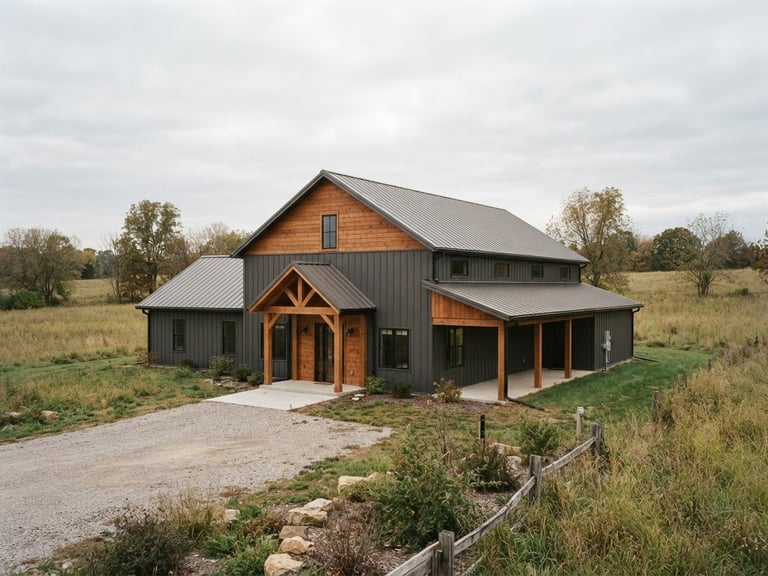
DIY vs. Contractor-Built Barndominium
One of the biggest cost decisions in a barndominium build isn't the finish level or the floor plan — it's who actually builds it. Acting as your own general contractor can meaningfully lower your total cost, but it also shifts real risk and time commitment onto you. Here's how the two approaches actually compare.
BarndoBudgetGuide is an independent resource. We are not a builder or general contractor. This guide is educational — always weigh your own time, skills, and risk tolerance before deciding.
The Core Tradeoff
Hiring a licensed general contractor means paying for their labor coordination, subcontractor relationships, project management, and — critically — their liability coverage. In exchange, you get a single point of accountability and a (usually) faster, more predictable timeline.
Acting as your own general contractor (often called "owner-builder") means you personally hire and coordinate every subcontractor — foundation, framing, electrical, plumbing, HVAC, insulation, drywall — and you carry the project management burden yourself. In exchange, you skip the contractor's markup entirely.
Cost Comparison
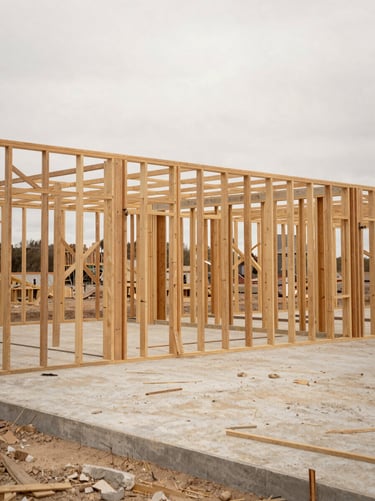
Contractor-Built (Turnkey)
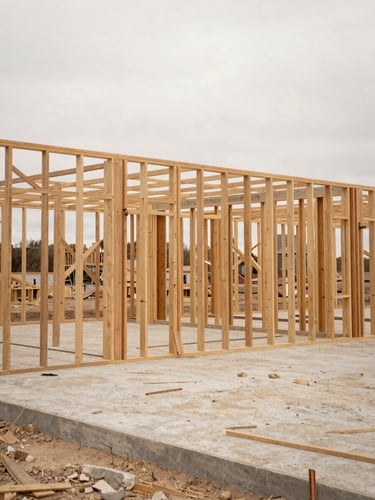
Owner-Builder (DIY-Managed)
A licensed general contractor typically adds 15-25% on top of raw material and subcontractor labor costs, covering their project management, scheduling, and liability. Using our calculator's national mid-range figures, a 2,400 sq ft turnkey build (40×60 footprint) runs roughly $240,000-$360,000, with the contractor's markup already factored into that range.
By acting as your own general contractor, you can save up to 20% on that same build by eliminating the contractor markup — though this requires substantial time investment in scheduling, vetting subcontractors, and managing the project day-to-day. That same 2,400 sq ft build could realistically land closer to $192,000-$288,000, assuming you're able to secure comparable subcontractor rates and avoid costly scheduling mistakes.
What You're Actually Trading
Quality control.
Financing complexity.
A good general contractor brings established subcontractor relationships and accountability for the finished product. As an owner-builder, you're personally responsible for vetting every subcontractor's quality and reliability — a strength if you have construction experience, a real risk if you don't.
As covered in our Financing Guide, some construction loan products require a licensed general contractor and won't approve owner-builder projects at all. Confirm this with your lender before assuming the owner-builder path is financially available to you.
Who Contractor-Built Tends to Work Well For
People with full-time jobs and limited flexible time
First-time builders without construction or project management experience
People who want a single point of accountability if something goes wrong
People whose financing option requires a licensed general contractor
Key Takeaways
Owner-building can save up to roughly 20% compared to a fully contractor-built project, but that savings comes from your own time and risk, not from thin air.
Financing availability may determine whether owner-building is even an option for you — confirm this with your lender first.
There's no universally "correct" choice — it depends on your available time, experience, risk tolerance, and financing situation
BarndoBudgetGuide is an independent construction cost resource. We are not affiliated with any builder, kit manufacturer, lender, or real estate agent. All figures are research-derived estimates — not quotes. Always obtain local contractor bids before committing to a budget.